
Every civilization on Earth has left a legacy. The legacies may be good or bad, important or unimportant, and sometimes barely heard of. Many everyday tasks and entertainment of ours would be impossible without these legacies, such as the task of completing assignments of hundreds of words in an afternoon or transporting numerous goods over huge distances. And fitting these descriptions, are three legacies of the ancient Chinese civilization, that changed three of the most fundamental aspects of civilization. The inventions of the Chinese Civilization, paper, the compass, and paper money changed the areas literature, exploration, and trade forever and by present day, has affected the lives of almost everyone on Earth.

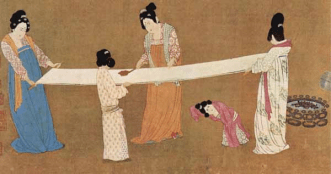
Production of Paper in Ancient China: Wikimedia Commons
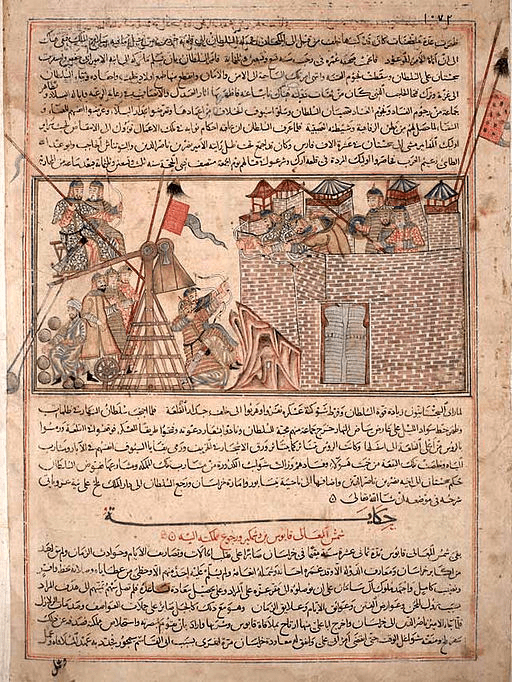
The invention of paper came in a time when writing materials were either impractical or rare, and a privileged few held access to them. In China, writing material such as papyrus was very uncommon, causing the civilization to be lagging behind in literacy, which changed in 105 AD, when Cai Lun, a eunuch during the Eastern Han dynasty, invented a method to make paper out of old fishnet, bark, hemp waste, bast fibers, and rag cloth, materials very cheap and in immense quantities, allowing for limitless amounts of paper. According to Timothy Hugh Barret (2008) and many others, this was a turning point in Chinese written culture. The technology exploded and literary works were recorded on almost infinite paper, making literary works easier to access and letting knowledge and skill spread faster. China dominated in literary advantage from the rest of the world, able to write thousands of books, and providing work for hundreds of thousands of Chinese families. Endymion (2012) has stated that China rapidly began to overtake Mediterranean Empires in book production. Later, though China guarded the secret heavily, papermaking spread to neighboring nations such as Vietnam, Korea, and Japan by 7th century AD (Brian Hoey 2016) as well as India by Buddhist monks. In 751, after Muslims captured Chinese papermakers in the battle of Talas and learned the process of papermaking, they quickly spread the technology around the empire and set up numerous paper mills, upgrading the process of making the paper as well, and by 1100 it had spread to Fes, Morocco. In the next few hundred years, the technology of papermaking spread throughout Europe and North America, and European papermaking spread to America in Mexico by 1575, and Philadelphia by 1690. Papermaking also exploded the number of books that could be written, bound, and published, and book collections all over the world exploded. Today, the invention of paper almost undoubtedly has impacted civilization as much as the wheel, and where the wheel transported goods, paper transported knowledge across millions of miles and boosted the literary culture of almost the entire planet to where there used to be only a few thousand books in royal libraries, to there being over a million titles in an average local library. Today, more than ever, it is easiest to gain knowledge and hundreds of thousands of books at the fingertips of most people.

Ancient Chinese Compass, used for Fortune-telling: Wikimedia Commons
According to an article on ThoughtCo. by Mary Bellis (June 30, 2018), the compass, invented in China, was originally a device for fortune-telling and geomancy, until the Ancient Chinese also realized the device could be used to find the directions. The spoon-shaped device crafted out of magnetite or lodestone was placed on a bronze plate which had cardinal directions and constellations marked on it and was apparently used by the first Chin emperor to affirm his right to the throne. (Silverman, Chinese Compass 270 C.E.) Eventually, the compass was used for navigation orienteering and naval orienteering by the Chinese military, and several versions of the compass were developed. There were wet compasses which had a ‘south-pointing fish’ floating in a bowl of water, and dry compasses with a magnetized needle inside a wooden turtle, on a bamboo needle, fixed with wax and left to move freely and point North. The invention of the compass and its spread through the trade routes of the world soon opened the path for a prolonged and easier voyage. Though in places like Arabia, sailor and navigators relied mostly on clear skies and constellations to find their way, but in places like the Mediterranean Sea, the compass gave the sailors the ability to start the sailing season earlier and finish it off later, giving them a few months advantage and boosting the area’s economy. (New World Encyclopedia 2019) As it spread around the world, sailing and geography overcame immense problems and coupled with the sextant, the compass could pinpoint one’s location anywhere in the world, and enabled civilization to the reach the furthest corners of our planet. Today, if it were not for the compass, then lands such as America, Hawaii, and Easter Island may have been unknown and unreachable to us. In short, the compass and resulting technology made the world a much smaller place.

Ancient Chinese Promissory Note from Song Dynasty: Wikimedia Commons
According to historians, paper Money was invented in China, during the Tang dynasty (618 AD – 907 AD), when merchants often dispensed coins in a central depository, and obtained slips of paper, to conduct trading. Scholars such as Jacques Gernet (1962) say this occurred due to the fact that some transactions dealt with thousands of coins, an amount that is difficult to carry around, and others point out, much prone to robbery. However, if merchants dealt through a trustworthy, third-party which issued the slips, then trading could be made much more, easier. The later Song dynasty adopted the system under their wing, encouraging merchants to deposit their wealth in the Empire’s coffers and obtain a promissory note, enabling the depositor to collect their wealth whenever they please. These notes are considered the first legal tender (Coralie Boeykens 2007), and the system was immensely successful until the Mongol invasion of the Southern Song Dynasty. The incoming Yuan dynasty adopted this system too, and it was so successful, that the Records of the Venetian traveler Marco Polo, dedicate an entire chapter to the topic of paper money. Excerpted from the accounts, “It is in the city of Khanbalik that the Great Khan possesses his Mint. (…) In fact, paper money is made there from the sapwood of the mulberry tree, whose leaves feed the silkworm. (…) On each sheet which is to become a note, specially appointed officials write their name and affix their seal. (…) the chief impregnates his seal with pigment and affixes his vermillion mark at the top of the sheet. (…) This paper currency is circulated in every part of the Great Khan’s dominions, nor dares any person, at the peril of his life, refuse to accept it in payment.” (Polo, Marco, 1254-1323?). Through extensive trading with surrounding nations of China, and through the spread of the idea through travelers like Marco Polo, Europe soon followed in the system of promissory notes, slips, banks, depositories and the such. By 1660, goldsmiths in England were issuing certificates that were backed in gold, which were soon used and currency in itself, as they were worth their say in gold or silver (Mike Hewitt 2009). By 1680, the concept of paper money spread all over Europe and even in the New World, the Americas. All around the world, merchants and nations traded in currency, backed by gold. However, after WW1 and WW2, most of the world’s gold had been traded to the USA to finance wars all around the world. According to Nick K. Lioudis (2019), as the WW2 drew to a close, the dominant western leaders created the Bretton Woods Agreement, where the all the world’s currencies would be backed by the US dollar, and in turn, the dollar would be backed by gold. However, by 1976, the US dollar was taken off the Gold standard, and the world’s currencies were now fiat money, a means with which goods were traded, not a good for which one traded.
So, in conclusion, Paper, the compass, and paper money, were three of China’s most world-changing legacies, transforming literary culture, exploration and navigation, and finally commerce and trading. Three areas of human civilization that were essential to the progression of mankind and all three were first developed in the Far East Kingdoms of Ancient China. Because of these technological advancements, we are able to access millions of books at public libraries, navigate our world without losing our way, and able to conduct transactions with carrying around several hundred kilos of metal around every time. In short, though they may not be as infamous as the wheel or as devastating as guns, they nonetheless had no less effect or legacy in the course of human history.
BIBLIOGRAPHY
Barrett, Timothy Hugh (2008), The Woman Who Discovered Printing, Great Britain: Yale University Press, ISBN 978-0-300-12728-7
Wilkinson, Endymion (2012), Chinese History: A New Manual, Harvard University Asia Center for the Harvard-Yenching Institute
Brian Hoey (October 27, 2016) A Brief History of Papermaking. Books Tell You Why.com. Retrieved February 5, 2019, https://blog.bookstellyouwhy.com/a-brief-history-of-papermaking
Mary Bellis (July 30, 2018) The Compass and Other Magnetic Innovations. ThoughtCo. Retrieved February 5, 2019, https://www.thoughtco.com/compass-and-other-magnetic-innovations-1991466
Susan Silverman, AC. “Chinese Compass 270 C.E.” Smith College Museum of ancient inventions.Retrieved February 5, 2019, https://www.smith.edu/hsc/museum/ancient_inventions/compass2.html
History of Compass (2019) Facts and History of the Compass. Retrieved February 5, 2019. www.historyofcompass.com.
New World Encyclopedia (2019) Compass. Retrieved February 5, 2019, http://www.newworldencyclopedia.org/entry/Compass
Gernet, Jacques (1962). Daily Life in China on the Eve of the Mongol Invasion, 1250–1276. Stanford University Press. ISBN 978-0-8047-0720-6.
Coralie Boeykens (September 5, 2007) Paper money, a Chinese invention? National Bank of Belgium. Retrieved February 6, 2019, https://www.nbbmuseum.be/en/2007/09/chinese-invention.htm
Polo, Marco, 1254-1323? The Book of Ser Marco Polo, the Venetian, Concerning the Kingdoms and Marvels of the East. New York: Scribner, 1929.
Mike Hewitt (January 7, 2009) A History of Paper Money. BullionVault. Retrieved February 6, 2019, https://www.bullionvault.com/gold-news/paper_money_010720091
Nick K. Lioudis (February 3, 2019) What is the Gold Standard? Investopedia. Retrieved February 6, 2019, https://www.investopedia.com/ask/answers/09/gold-standard.asp
.jpg?w=1100)



 Ancient History w/ Ibrahim Mallik